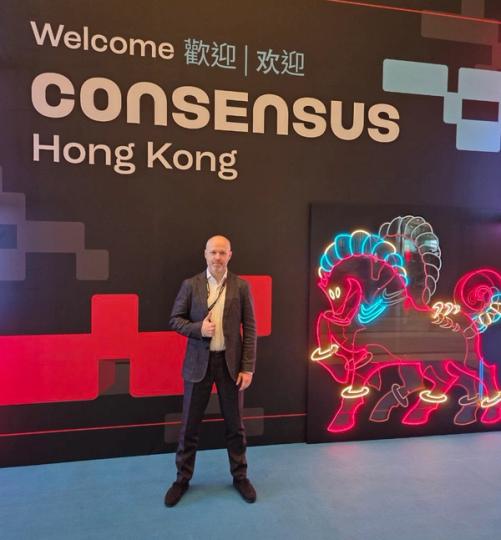
HONG KONG — The rise of A7A5, a Ruble-denominated stablecoin issuer, reflects a significant shift in the landscape of international finance, particularly amid stringent sanctions. Oleg Ogienko, the director of Regulatory and Overseas Affairs at A7A5, firmly insists that his company adheres to compliance regulations, especially those set forth by Kyrgyzstan, where the firm is based.
Resistance Through Compliance
Ogienko has been vocal in defending A7A5 against allegations of non-compliance, asserting that their practices are legitimate and transparent. “We fully comply with the regulations of Kyrgyzstan. We do not engage in illegal activities,” he stated during an interview at Consensus Hong Kong. The company utilizes robust Know Your Customer (KYC) and Anti-Money Laundering (AML) measures to ensure integrity within its operations.
The Impact of Sanctions
A7A5 is uniquely positioned in a financial ecosystem strained by sanctions imposed by the U.S. Treasury on its affiliated entities, including Promsvyazbank, which holds reserves for the stablecoin. While these sanctions limit interactions with entities that operate with U.S. dollars, they do not impede A7A5 within Kyrgyzstan or Russia, where companies are seeking alternatives to bypass financial restrictions.
The Growing Demand for Cross-Border Solutions
The company has seen a surge in demand from international businesses wanting to conduct transactions with Russian exporters and importers. Despite restrictions, Ogienko noted that these challenges have not hindered trade but instead created a niche market for A7A5, enabling it to add nearly $90 billion to its circulating supply last year, surpassing the growth of other major stablecoins like USDT and USDC.
Future Prospects and Collaborations
Business development remains a priority for A7A5. Ogienko expressed hopes to integrate further into decentralized finance (DeFi) protocols to enhance liquidity, even though centralized exchanges are hesitant to list A7A5 due to potential sanctions risks. He pointed out that the company is actively seeking partnerships, attending conferences like Consensus Hong Kong to connect with other blockchain entities. “We are here to collaborate,” he stated, emphasizing the importance of working with various blockchains for growth.
Regulatory Landscape in Russia
While A7A5 cannot operate within Russia yet due to ongoing legislative discussions regarding stablecoin regulations, Ogienko maintains a proactive relationship with local authorities. He describes the dynamics as advisory, aimed at shaping a financial infrastructure that supports innovation rather than inviting direct oversight.
Conclusion: Navigating a Complex Environment
As A7A5 navigates the complexities of sanctions and regulatory frameworks, Ogienko’s vision remains clear. “We believe we can significantly grow the trading volume processed through A7A5,” he stated, expressing aspirations to capture over 20% of Russia’s transaction settlements through the stablecoin. The company’s journey illustrates the intricate dance of compliance, opportunity, and innovation in today’s turbulent financial environment.